Conversations about artificial intelligence often begin with risk. Employers worry about compliance obligations, human rights concerns, privacy issues, and the possibility that technology could make mistakes at scale. Those concerns are important, but focusing exclusively on risk overlooks another side of the conversation: AI also has the potential to help organizations create more inclusive and…

Even if your company hasn’t formally adopted AI yet, you still need an AI policy. This is true even if your company doesn’t allow employees to use AI or if it isn’t planning on purchasing any AI tools.  

The reality is, if you employ people, AI is already present in your workplace. The only question…

Technology has made it easier than ever to monitor how work gets done. With the rise of hybrid and remote work, digital productivity tools, and AI‑enabled systems, workplace monitoring has become a key compliance issue for Ontario employers.  

Ontario does not have a single, comprehensive statute governing employee privacy in the workplace. However, under the Employment Standards Act, 2000 (“ESA”), employers with 25 or…

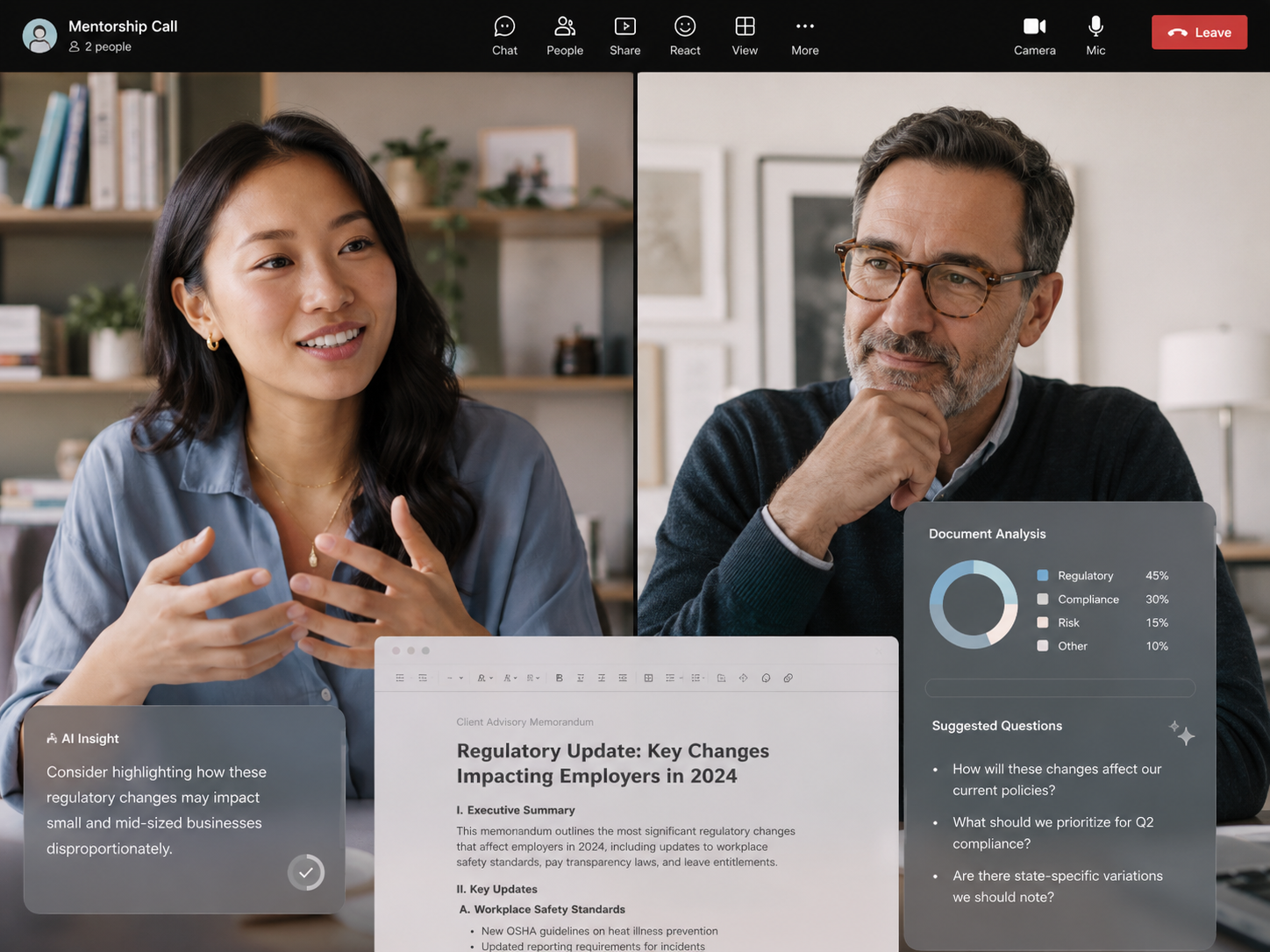
Mentoring has always required a deliberate and intentional approach. It is not something that happens automatically, even in traditional workplaces. In a virtual environment, that becomes even more apparent. 

Without the benefit of informal, in-person interaction, mentoring has to be built into how the organization operates. That includes recurring check-ins that are actually scheduled, as well as peer buddy systems so people have someone…

Hiring is one of the most time-consuming parts of running a business. It is also one of the riskiest. 

So it is no surprise that employers are turning to AI to speed things up. Resume screening tools. Automated shortlists. Chatbots that pre-screen candidates. Applicant tracking systems that rank people before a human ever looks at an…

Remote work settled into Canadian workplaces long ago, yet many employers still operate as though the shift was temporary. The result? Quiet risks, unclear expectations, and legal obligations hiding beneath everyday workflows. 

Remote work isn’t dangerous on its own; unstructured remote work is. 

The most common misstep happens before employers even realize it: allowing an…

The Case for Diversity

Beyond all the moral and ethical reasons for promoting a diverse workforce, the business case for diversity is clear. 

A decade ago, a McKinsey study of 366 companies in Canada, Latin America, the United Kingdom, and the United States found clear business advantages for diverse businesses.

According to the study, companies…

“Our mental space (i.e. idea space) expands and contracts in direct proportion

…

AI is leading to sweeping changes in the job market, including how people apply for jobs.


A 2025 report from recruitment firm Career Group Companies found that only 35% of job seekers have never used AI to assist in their job search. Here’s how those who did leverage AI used it:

Continue Reading AI in Recruitment: What Every Hiring Manager Needs to Know

As tensions rise between the United States and Canada (and other countries), many American businesses are reevaluating their global strategies.

The evolving U.S. trade policy, marked by tariffs, export restrictions, and geopolitical uncertainty, has pushed companies to seek more stable and accessible markets. Enter Canada: a relatively politically stable, resource-rich, and business-friendly country with a skilled workforce and strong legal framework.

Continue Reading Crossing North: A Playbook for U.S. Employers